

Home [Not So] Sweet Home: Critters
One late fall day years ago, I happened to see a squirrel run along the driver’s side of my father’s parked 1991 Oldsmobile station wagon before disappearing into the wheel well. Unsure where exactly it had gone, I sent my father a quick text suggesting he check the car before driving it.
Saturday morning came, and while no squirrel was found, this image was sent instead:
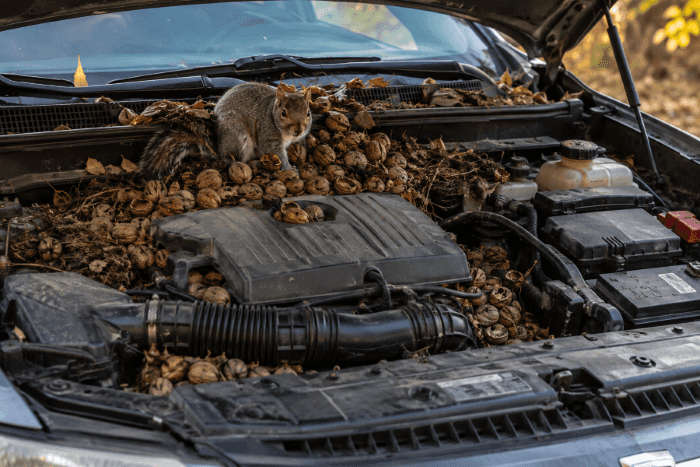
Within less than 48 hours (I had borrowed the car the day before the squirrel disappeared), the engine bay had been completely filled with black walnuts. After several Home Depot buckets’ worth of walnuts were removed, it was finally safe to start and drive the wagon.
Had the engine been started without checking first, it could have caused significant damage.
Here at DeNooyer Chevrolet, we’ve had our fair share of critter encounters—both personally and through our customers. We’ve found everything from mice hiding in ductwork and abandoned nests to chewed wiring and even animal remains inside vehicles.
As temperatures begin to cool, wildlife starts looking for warm, protected places to spend the winter—and unfortunately, your vehicle can be the perfect home.
Why Do Animals Choose Your Vehicle?
- Food Sources
Trash cans in the garage, unsealed pet food, food left inside your vehicle, or parking near farms can all attract wildlife. - Soy-Based Wire Coatings
Some manufacturers use soy-based insulation on wiring, which certain rodents find appealing. - Warm, Safe Shelter
Engine compartments provide protection from predators and cold weather, making them an ideal nesting spot.
Signs a Critter Has Moved In
- Footprints across the engine cover or under the hood.
- Nesting materials such as leaves, grass, insulation, or paper.
- Missing or damaged hood insulation. We’ve even seen insulation completely removed except for the retaining clips.
- Animal droppings or nests inside the air filter housing or engine compartment.
- Strong foul odors that become worse when the heater or fan is turned on.
- Electrical problems, warning lights, or difficulty starting and operating the vehicle due to chewed wiring.
What Should You Do?
- Carefully remove any nesting materials you find.
- Safely remove any animal remains while wearing gloves. A plastic bag and scraper may be helpful for cleanup.
- Place mothballs around the engine bay (one of the most effective deterrents).
- Hang pieces of Irish Spring soap around the engine compartment, another popular wildlife deterrent.
- Remove any nearby food sources, including food stored inside the vehicle.
- Use rodent repellents, including sprays, tapes, or essential oil-based products.
- Schedule an appointment with our Service Team and let us inspect your vehicle for damage and safely remove any unwanted guests.
If all else fails—or you’d simply rather not deal with an unexpected furry roommate—we’re always happy to help. Sometimes, opening the hood becomes a team effort around here!
“For the Miles Ahead” is the DeNooyer Chevrolet blog series dedicated to helping our friends, family, and customers better understand automotive maintenance and vehicle care.
Have a service question or automotive mystery? Email [email protected], and your question may be featured in a future edition of Ask Motor Maven.

0 comment(s) so far on Home [Not So] Sweet Home: Critters